
比較教育/Comparative Education 2025
- 今学期は、ゲストスピーカーをお招きして、ネパールの教育について、お話を伺うことができました。各自のプロジェクトでは、ブラジル、中国、日本、アメリカ、フランスと、様々なテーマで様々な地域に焦点を当てました。
- We were able to invite a guest speaker this semester to learn about education in Nepal. Each student conducted a mini-research project focusing on the area that she/he is interested in including Brazil, China, Japan, the United States, and France.
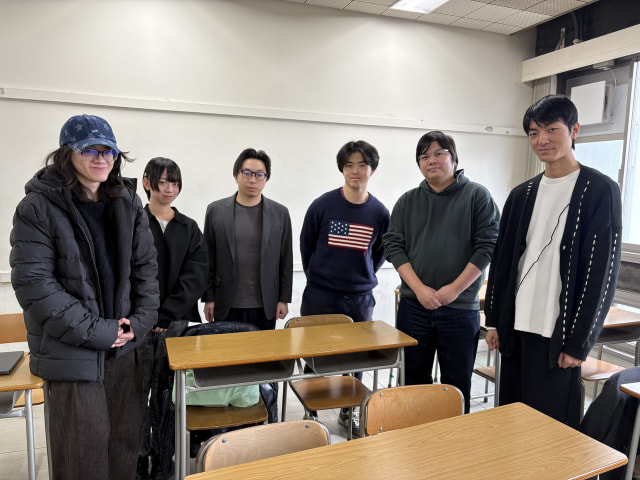
メンバー / Member
- 石山 真紀 / ISHIYAMA MAKI
- 木下 恵史郎 / KINOSHITA KEISHIRO
- 橋本 玲 / HASHIMOTO REI
- セン 馥聡 / CHAN FUTSUNG
- 横川 昂永 / YOKOGAWA KOEI
- 田中 一蕗 / YANAKA IBUKI
プロジェクト / Research Projects
-
Comparative Analysis of Public and Private Education in Japanese Rhythmic Education
-
Designing the International Bubble: A Comprehensive Literature Review on Curriculum Design and Student Interaction in Japanese and Chinese Universities
-
Japanese Language Education and Identity Formation among Japanese-Brazilians: A Comparative Perspective on Japan and Brazil
-
Why Is Japanese Primary Education Test-Oriented?A Comparative Study with England and the United States
-
How Home Economics, Especially Cooking, Is Taught in Schools: Comparing the situations in China, France, and Japan
-
The Impact of Educational Environment on Gender Perspectives: A Comparative Study of All-Boys School Graduates and Business Professionals
メンバーの声 / Member’s Voice
In this course, I had the opportunity to explore early childhood education and its surrounding environments through an international lens. Rather than being a passive learning experience focused solely on input, the lectures were highly interactive. Through constant communication with Professor Hayashi, and my classmates, I was able to actively refine my own educational philosophy and develop a more global perspective. The process of exchanging and sharing ideas with people from such diverse backgrounds was intellectually stimulating and truly engaging in every session.Thank you very much for this valuable experience.
Throughout this course, I learned the basic concept of comparison and gained a clearer understanding of what comparative education is. I also had a valuable opportunity to give a presentation in English, which helped me improve my English speaking skills and my confidence in academic communication. In addition, I learned a great deal about education systems in different countries, which gave me broader and more concrete knowledge about education beyond the Japanese context. Learning about multiple countries allowed me to see education not as a single system, but as something shaped by social and institutional differences. In particular, I found the differences between Japan and European countries in primary education especially interesting. These comparisons helped me question why certain educational practices are taken for granted in Japan, and they directly motivated me to develop my research topic in this course. Overall, this class deepened both my academic interests and my perspective on education.
This course provided me with a valuable opportunity to study early childhood education through an international comparative lens. Centering on the theme of “Early Childhood Education and Music,” which has long interested me, I was able to advance my research on eurhythmics education. A major gain was deepening my personal interests from an academic perspective while analyzing prior research and data. Furthermore, the small class size provided a valuable opportunity to gain deep insight into the research topics of other members. Exposure to different perspectives and subjects cultivated my ability to view matters from multiple angles and significantly broadened my own knowledge. Thank you for the past six months!