
国際化のなかで育ちゆく子どもたち/International Perspectives on Childhood 2025
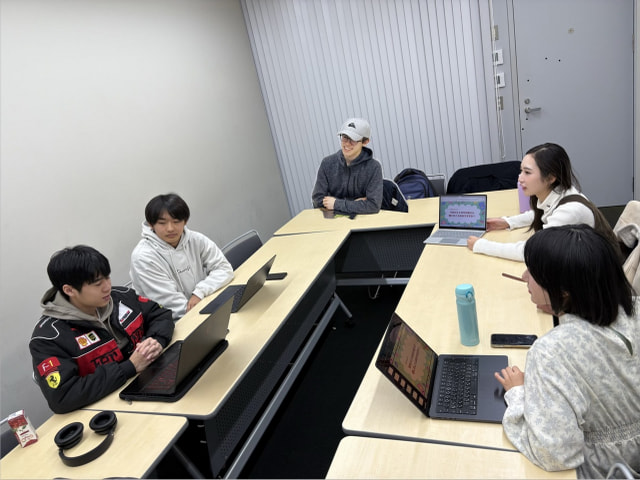
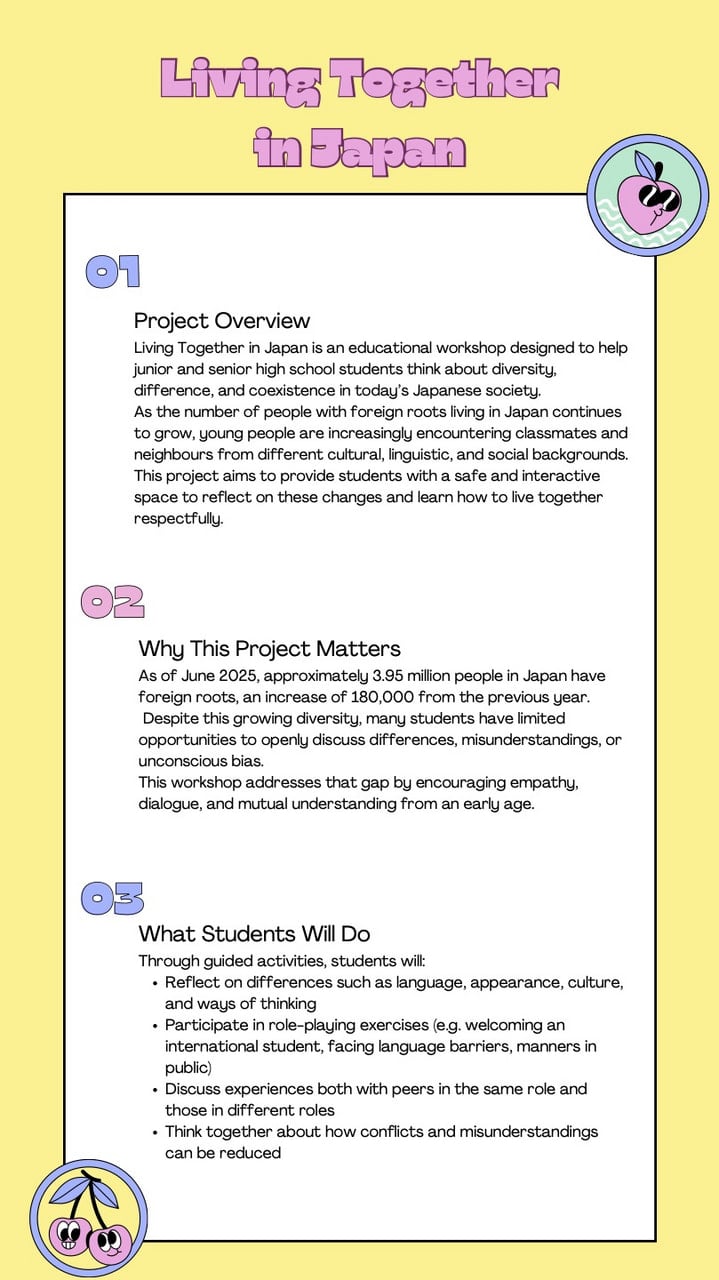
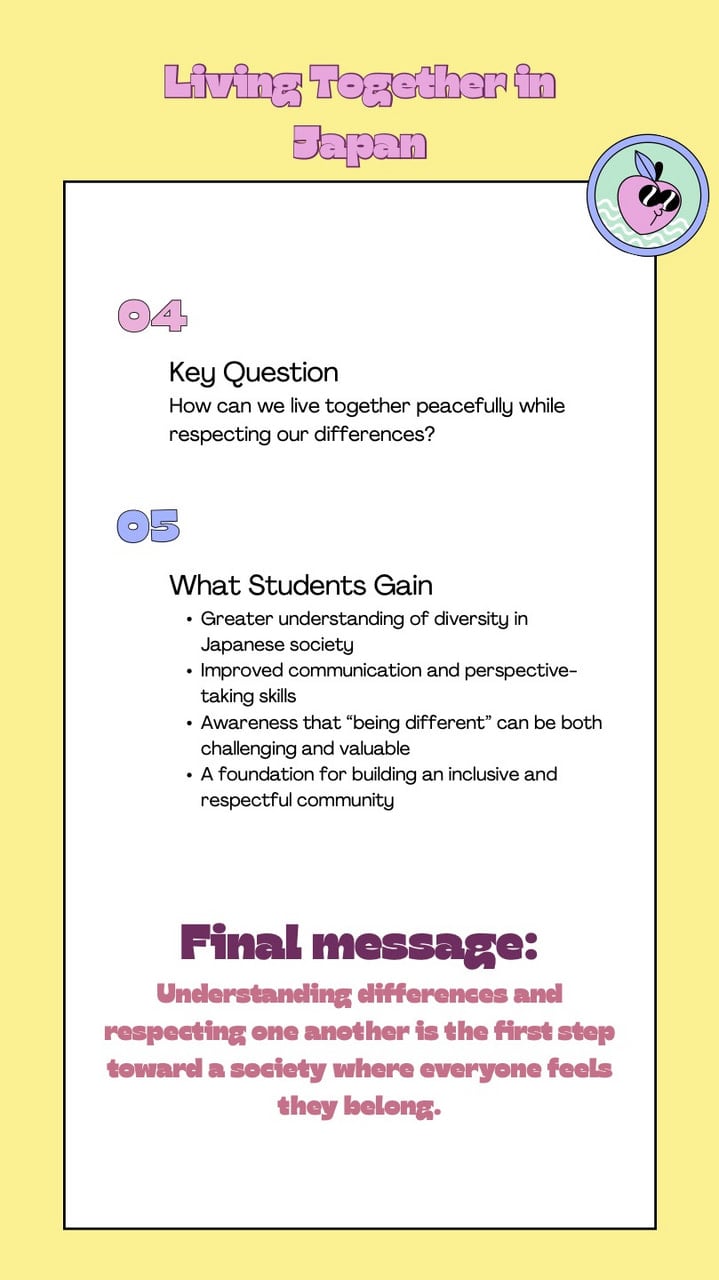
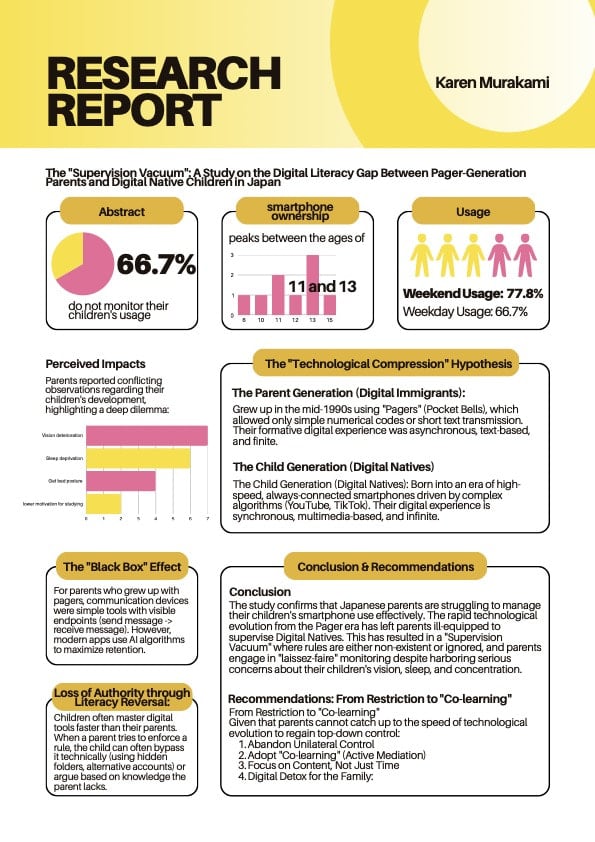
- 個人プロジェクトとグループプロジェクトに分かれ、合わせて3つのプロジェクトとなりました。各プロジェクトで、知りたいことを絞り、調査方法を考え、データを集めて分析し、興味深い結果を得ることができました。
- There are three research projects: two individual and one group. Students think about their interests, the most suitable research method for their questions, and how to collect and analyze data. All of the projects were interesting!
メンバー / Member
- 豊澄 紗耶花 / TOYOZUMI, SAYAKA
- 上阪 遙希 / UESAKA, HARUKI
- 小林 城太郎 / KOBAYASHI, JOTARO
- ホーガン サニー泰輝 / HOGAN, SONNYTAIKI
- 村上 佳蓮 / MURAKAMI, KAREN
プロジェクト / Research Projects
メンバーの声 / Member’s Voice
Last spring, I travelled to India, where I visited local educational institutions and witnessed educational inequality based on the caste system. Through these visits, I saw how children’s access to education can be strongly influenced by their background rather than by their effort or ability. This experience sparked my interest in differences in education among children around the world, as well as in the role education plays in shaping children’s lives. For this reason, I decided to take this course. In the first semester, we studied peace education, and in the second semester, we conducted research on multicultural coexistence in Japan. Through these classes, I was able to hear a wide range of perspectives, not only from the professor but also from my classmates, which I found extremely engaging and thought-provoking.
This seminar helped me understand how childhood and education are shaped by culture, globalization, and social change. Through anthropological, psychological, and comparative perspectives, I learned that parenting, socialization, and education differ greatly across societies.
I was especially interested in topics such as media, globalization, and children, as well as comparative studies between Japan and other countries. Class discussions and presentations helped me think critically and learn from different viewpoints. Overall, this seminar broadened my perspective on the relationship between culture and childhood and deepened my interest in conducting research on contemporary issues affecting children in Japan.
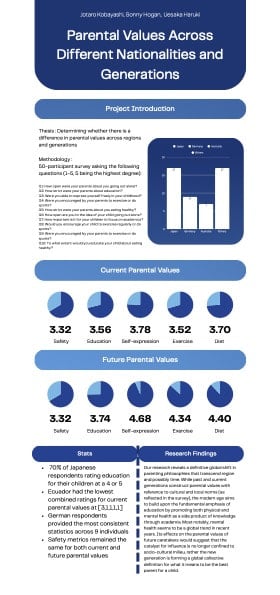
Overall, this seminar was most valuable in serving as a stepping stone for when I might have a child myself. The content was rich in highlighting child behaviour and parental involvement, offering great insight into how socio-cultural milieus can influence household parent-child interactions, as well as teacher-child interactions in pre-school environments. My biggest takeaway from this class is the irony that occurred when working on our final project. Our survey results and data analysis would suggest that the parental values of the modern generation are becoming rather collective regardless of region, conveying a global shift from cultural parenting values to internationalized parenting values. It would be interesting to stay up to date about the state of parenting going forward.
In this class on child development, I was able to develop my own childhood insights into general theories using statistics from actual surveys. In the first half of the semester, I researched the relationship between siblings and personality based on my own family. In the second half, however, I moved to a different topic for a joint research project. I feel this allowed us to get more data and led to statistically significant results. During this research, we could not get data from international students from the US, South Asia, or South America. I felt that collecting such data would help us understand the relationship between specific regions and child-rearing better. In the future, if I do research again, I want to focus on collecting data from people with various backgrounds.
In this general education seminar class, I thought the class would be mainly consisted of lecture-style classes. Instead, in every class, the students had time to discuss and talk as much as the professor did. This allowed students to share their thoughts, give ideas to each other, discuss deeply and think objectively about their own thoughts and ideas. We were also given the freedom to pick our book to read and present about, and to do a final project on a topic of our choice (as long as it was related to education). Each student/group had unique projects and ways to conduct surveys which I was truly impressed by. Overall, the class has a vibe that is easy-going and easy-to-talk-to. This gives students the opportunity to discuss more freely and share their thoughts/ideas. The amount of assignments and workload for the final projects for each semester was reasonable, although depending on the student, the amount of work could change. Personally, in this class, I was happy to have the chance to practice my English and discuss with it. I was also able to dive into my final projects deeply. I think this class allowed me to grow in areas of language and public-speaking, as there were times in every class where I had to talk in front of the class. I believe it became easier to talk in front of everyone.